
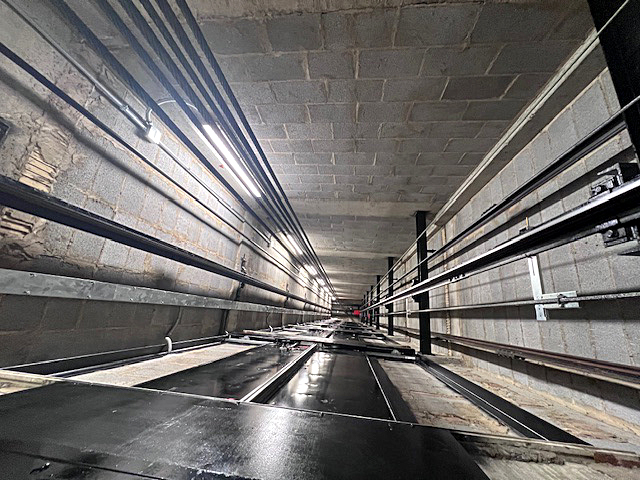
10 Signs It May Be Time to Consider Elevator Modernization
Every elevator requires maintenance and occasional repairs. But there comes a point when repairing the same aging equipment over and over may no longer be the best strategy.
 If your elevator has been in service for decades, you may find yourself
asking an important question:
Are we maintaining an aging elevator—or simply repairing it long enough to keep it running?
There is no universal age at which an elevator must be modernized. The right decision depends on the equipment, its maintenance history, usage, condition, availability of replacement parts, and the needs of the building.
Resolute Elevator approaches modernization by evaluating the entire system and helping building owners understand their options. A modernization can range from replacing critical operating components to a comprehensive upgrade of the elevator system. The objective is to improve the elevator’s performance, reliability, safety, efficiency, and long-term serviceability.
Here are 10 signs that it may be time to look beyond another repair.
1. Your Elevator Is Getting Old
Age alone does not mean an elevator needs to be modernized. A well-maintained elevator can provide many years of service.
However, as equipment ages, components eventually wear out, technology becomes outdated, and replacement parts can become increasingly difficult to obtain.
Controllers, drives, door operators, machines, wiring, fixtures, and other components all have service lives. When several major components are reaching the end of their useful life at the same time, modernization may make more sense than continuing to replace individual parts.
The important question isn’t simply “How old is the elevator?”
It’s “What condition is the elevator in, and how much useful life remains in its major components?”
2. Repair Calls Are Becoming More Frequent
An occasional repair is part of owning an elevator.
Frequent repairs are different.
If your elevator seems to require attention every few weeks or months, repeated service calls may be an indication that individual repairs are no longer addressing the underlying problems.
Warning signs include:
- Frequent shutdowns
- Recurring fault conditions
- Repeated door problems
- Intermittent operation
- Frequent emergency service calls
- The same component failing repeatedly
When repairs become a pattern rather than an exception, it is worth stepping back and evaluating the entire system.
3. Replacement Parts Are Becoming Difficult to Find
One of the biggest challenges with aging elevators is obsolete equipment.
Older systems may rely on controllers, relays, drives, door equipment, or other components that are no longer manufactured. Even when replacement parts can be found, they may require special sourcing, refurbishment, or additional time to obtain.
That can mean:
- Longer elevator downtime
- Higher repair costs
- Difficulty maintaining consistent service
- Increased dependence on obsolete components
- Greater uncertainty when another component fails
Modernization can replace obsolete technology with current components that are supported and more readily serviceable.
4. Your Elevator Is Spending Too Much Time Out of Service
Elevator downtime affects more than the elevator itself.
In an apartment building, it can create problems for residents. In an office building, it can disrupt employees and visitors. In a school, hospital, hotel, church, or commercial property, elevator availability can be an essential part of daily operations.
Repeated outages may result in:
- Passenger inconvenience
- Accessibility challenges
- Disruption to building operations
- Lost productivity
- Tenant complaints
- Emergency repair expenses
If downtime is becoming a recurring problem, it is time to determine whether the underlying equipment—not just the individual failure—needs attention.
5. The Ride Doesn’t Feel Like It Used To
Passengers notice elevator performance.
A properly functioning elevator should provide controlled acceleration, smooth travel, accurate leveling, and consistent door operation.
If passengers experience:
- Abrupt starts or stops
- Excessive vibration
- Uneven leveling
- Unusual mechanical noises
- Slow or inconsistent doors
- Jerky acceleration or deceleration
those symptoms deserve investigation.
Modernization can address aging controllers, drives, machines, door equipment, and other components that influence ride quality.
A better ride isn’t simply about comfort. Consistent performance can also improve the overall passenger experience and confidence in the building’s vertical transportation system.
6. Your Elevator Technology Is Outdated
Elevator technology has changed significantly over the life of many existing systems.
Older elevators may rely on relay logic or early electronic controls that are difficult to maintain and diagnose. Modern controllers and drive systems can provide more precise control, improved diagnostics, and better coordination between the elevator’s major operating components.
A modernization may also provide opportunities to update:
- Controllers
- Drives
- Door operators
- Hall fixtures
- Car operating panels
- Emergency systems
- Wiring
- Machines and motors
- Other critical operating components
The exact scope depends on the elevator and its condition.
7. Energy Efficiency Has Become a Concern
Older elevator equipment may not operate as efficiently as modern systems.
Depending on the existing equipment, modernization can incorporate more efficient motors and drive systems, LED lighting, improved controls, and other technologies that can reduce energy consumption.
For some buildings, energy efficiency is an important part of the modernization equation.
For others, reliability, safety, parts availability, and performance may be the primary drivers.
A professional evaluation can help determine which improvements are meaningful for your particular elevator.
8. Maintenance and Repair Costs Keep Increasing
One of the clearest reasons to evaluate modernization is the financial pattern.
Look beyond the cost of your most recent repair. Review the last several years of maintenance and repair expenses.
Ask:
- Are repair costs increasing?
- Are major components failing more frequently?
- Are you paying repeatedly to repair the same systems?
- Are obsolete parts increasing the cost of repairs?
- Are extended outages affecting tenants or building operations?
- How much longer can the existing equipment reasonably be expected to operate?
A modernization requires an investment, but continuing to spend money on an aging system also has a cost.
The goal is to compare the long-term cost and value of modernization with the cost, risk, and expected remaining life of continued repairs.
9. Your Building Has Changed
Your elevator may have been perfectly suited to your building when it was installed.
Your building may not be the same today.
Occupancy may have increased. Traffic patterns may have changed. A building may have been renovated, repurposed, or converted to a different use.
Modernization can provide an opportunity to improve elevator performance and better match the system to the building’s current needs.
It can also be an opportunity to update cab interiors, fixtures, and other visible elements while the major elevator work is being completed.
Resolute Elevator has modernized elevators in a variety of buildings, including schools, commercial properties, residential facilities, and historic structures.
10. You’re Repairing Problems Instead of Solving Them
This may be the most important sign of all.
If your elevator repeatedly breaks down, requires obsolete parts, produces recurring service calls, or continues to experience the same problems after repairs, it may be time to stop looking at each failure individually.
Instead, evaluate the elevator as a complete system.
A modernization can replace the components that are creating recurring problems rather than continuing to repair them one at a time.
That doesn’t mean every aging elevator needs a complete replacement.
It means the right solution should be based on the condition and needs of the entire system.
Modernization Doesn’t Necessarily Mean Replacing Everything
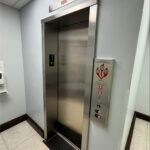
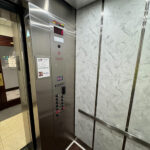
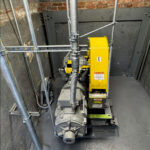
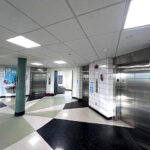
One of the most common misconceptions about elevator modernization is that the entire elevator must be replaced.
That’s not necessarily the case.
Modernization is the process of upgrading critical and, when appropriate, cosmetic components of an existing elevator system. Depending on the equipment and the owner’s goals, the scope can be tailored to the specific elevator.
A project may include some combination of:
- Controller and drive
- Traction machine
- Motor
- Door equipment
- Hoistway wiring
- Fixtures
- Car operating panel
- Elevator cab
- Safety-related equipment
- Other aging or obsolete components
For example, Resolute Elevator’s recent NIMED Building modernization included a new traction machine, controller, elevator cab, modern hall fixtures and controls, and new hoistway wiring.
At the historic Carolina Hotel, modernization included the controller and drive, hoist machine and motor, door equipment, cab refurbishment, and safety and code-related upgrades while preserving the character of the historic building.
The scope should be determined by the elevator—not by a one-size-fits-all modernization package.
What Does a Modernized Elevator Give You?
When properly planned and executed, modernization can provide significant improvements in several areas.
Improved Reliability
Replacing aging or obsolete components can reduce recurring failures and help provide more predictable operation.
Better Ride Performance
Modern controls, drives, machines, and door equipment can improve acceleration, deceleration, leveling, and overall ride quality.
Improved Safety and Code Compliance
Modernization provides an opportunity to address aging safety equipment and bring the elevator into compliance with applicable current requirements.
Improved Energy Efficiency
Modern motors, drives, lighting, and controls can reduce energy consumption depending on the existing system and the modernization scope.
Easier Long-Term Maintenance
Replacing obsolete components with current, serviceable equipment can make future maintenance and repairs more predictable.
Improved Passenger Experience
Updated operation, doors, fixtures, and cab interiors can make a significant difference in how passengers experience the building.
Protecting the Building’s Long-Term Value
An elevator is an important building asset. A reliable, modernized elevator can support the property’s long-term usability, appearance, and value.
The Right Question Isn’t “How Old Is My Elevator?”
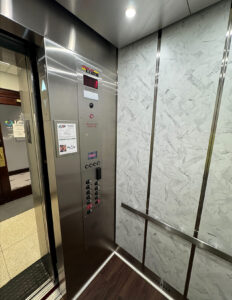
The better question is:
“What is the condition of my elevator, what is it costing me to keep it running, and what will it take to keep it reliable for the next 10, 20, or more years?”
Every elevator is different.
Some aging elevators can continue to provide reliable service with proper maintenance. Others have reached the point where repeated repairs, obsolete components, poor ride quality, and increasing downtime make modernization the more practical long-term solution.
Resolute Elevator can evaluate your existing equipment, explain the condition of the system, identify potential modernization needs, and help you understand the available options.
Our approach is straightforward: understand the equipment, understand the building, and develop the right modernization strategy for both.
Is It Time to Take a Closer Look?
If your elevator has become unreliable, increasingly expensive to repair, difficult to source parts for, or simply isn’t performing the way it once did, don’t wait for the next major failure to start the conversation.
A professional modernization evaluation can help you understand where your elevator stands and what your options are.
Resolute Elevator provides elevator modernization, maintenance, new elevator installations, and vertical transportation solutions for building owners, facility managers, contractors, and other building professionals.
If you’re wondering whether your elevator needs another repair—or a more comprehensive solution—contact Resolute Elevator for a consultation.
Sometimes the best repair is a modernization plan.
Recent Comments